
Trout Lily (Erythronium) Planting & Growing Guide
Now, you might be wondering why such spectacular plants would be called Trout Lilies, but the answer actually has nothing to do with their flowers. Instead, these plants are named after their fish-shaped, speckled foliage! Oh, and their other common name, Dog Tooth Violets, comes from the angular shape of the corms. These wonderful woodland beauties thrive in various light conditions and are ideal for naturalizing. Learn more about these low-maintenance bloomers with this helpful guide!
Success Snapshot

PLANTING
DEPTH
3-4"

WATER
QUANTITY
Moderate

SUNLIGHT
QUANTITY
Partial to Full Shade

PLANTING
PROXIMITY
4-5" Apart

BLOOM
SEASON
Spring - Summer

HARDINESS
ZONES
Zones 3-9
Shop Related Products
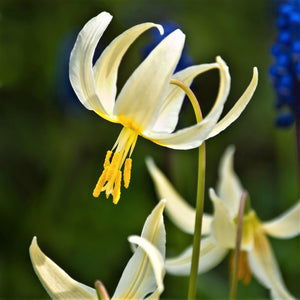

Erythronium - Californicum White Beauty
$4.95
Contains: 3 Erythronium bulbs
Botanical Name: Erythronium californicum 'White Beauty'
Exposure: Partial Shade to Full Shade
Hardiness: Zones 3-9
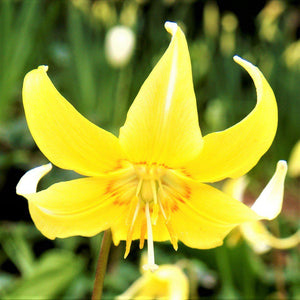
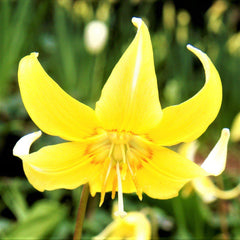
Erythronium - Pagoda Dog Tooth Violet
$8.95
Contains: 3 Erythronium bulbs
Botanical Name: Erythronium 'Pagoda'
Exposure: Partial Shade to Full Shade
Hardiness: Zones 4-9
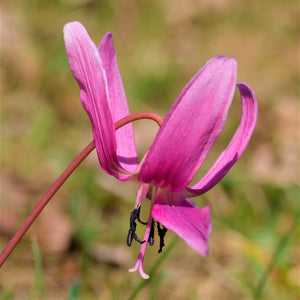

Erythronium - Dens-Canis Rose Queen
$12.95
Contains: 3 Erythronium bulbs
Botanical Name: Erythronium dens-canis 'Rose Queen'
Exposure: Partial Shade to Full Shade
Hardiness: Zones 3-9
Where to Plant
Trout Lilies thrive in various light conditions, from full sun to partial shade to dappled shade, and prefer evenly moist soil during active growth periods. Regions that are drier in the summer and fall are fine, as these plants are dormant during those times.
When to Plant
Plant your Erythronium in the fall as soon as you receive them, as these bulbs will not tolerate drying out. You can expect roots to form shortly after planting, with leaves and flowers developing in the spring.
How to Plant
- Find a spot with good light where the soil is evenly moist during the early part of the year when these plants are actively growing.
- Dig holes and tuck the bulbs into loosened soil about 5" deep and 2" apart, with the pointed end facing upwards.
- Water thoroughly after planting, soaking the soil to settle it around the bulbs.
How to Grow
- Water as needed during active growth periods, supplying about 1" of moisture per week.
- Clip off any spent flower stems after blooming has finished for the season.
- Leave the foliage in place after blooming has finished for the season. The leaves will gather sunlight to create food through photosynthesis, strengthening the bulb for the future.
- Remove the dry foliage when the leaves turn yellow and die back around early to mid-summer.
- Allow your Trout Lilies to rest for a few months in dormancy before beginning the next growing cycle in the spring.
Erythronium Tips & Tricks
- Plant these bulbs as soon after you receive them as possible, as they prefer not to be out of the soil longer than necessary and will not tolerate drying out.
- Feel free to snip the bell-shaped blossoms for gorgeous bouquets when in bloom.
- Grow these bulbs in the landscape rather than containers, as they prefer to be left undisturbed.
- Keep in mind that weekly deep waterings are better than lighter drinks every day or two.
- Expect these plants to reappear every spring, gradually developing into large clumps.

'%3e%3cg id='Final-Copy-2_2_' transform='translate(1275.000000, 200.000000)'%3e%3cpath class='st0' d='M7.4,12.8h6.8l3.1-11.6H7.4C4.2,1.2,1.6,3.8,1.6,7S4.2,12.8,7.4,12.8z'/%3e%3c/g%3e%3c/g%3e%3c/g%3e%3cg id='final---dec.11-2020'%3e%3cg id='_x30_208-our-toggle' transform='translate(-1275.000000, -200.000000)'%3e%3cg id='Final-Copy-2' transform='translate(1275.000000, 200.000000)'%3e%3cpath class='st1' d='M22.6,0H7.4c-3.9,0-7,3.1-7,7s3.1,7,7,7h15.2c3.9,0,7-3.1,7-7S26.4,0,22.6,0z M1.6,7c0-3.2,2.6-5.8,5.8-5.8 h9.9l-3.1,11.6H7.4C4.2,12.8,1.6,10.2,1.6,7z'/%3e%3cpath id='x' class='st2' d='M24.6,4c0.2,0.2,0.2,0.6,0,0.8l0,0L22.5,7l2.2,2.2c0.2,0.2,0.2,0.6,0,0.8c-0.2,0.2-0.6,0.2-0.8,0 l0,0l-2.2-2.2L19.5,10c-0.2,0.2-0.6,0.2-0.8,0c-0.2-0.2-0.2-0.6,0-0.8l0,0L20.8,7l-2.2-2.2c-0.2-0.2-0.2-0.6,0-0.8 c0.2-0.2,0.6-0.2,0.8,0l0,0l2.2,2.2L23.8,4C24,3.8,24.4,3.8,24.6,4z'/%3e%3cpath id='y' class='st3' d='M12.7,4.1c0.2,0.2,0.3,0.6,0.1,0.8l0,0L8.6,9.8C8.5,9.9,8.4,10,8.3,10c-0.2,0.1-0.5,0.1-0.7-0.1l0,0 L5.4,7.7c-0.2-0.2-0.2-0.6,0-0.8c0.2-0.2,0.6-0.2,0.8,0l0,0L8,8.6l3.8-4.5C12,3.9,12.4,3.9,12.7,4.1z'/%3e%3c/g%3e%3c/g%3e%3c/g%3e%3c/g%3e%3c/svg%3e) Your Privacy Choices
Your Privacy Choices